
Visiting the Isabella Stewart Gardner Museum has been on my list of things to do and my recent TeaTime trip to Boston finally gave me that opportunity.
More About Isabella Stewart Gardner
Born in 1840, Isabella Stewart Gardner married Bostonian Jack Gardner in 1860. After their only child died young, they traveled extensively, which sparked her interest in art. She studied art history and Italian literature at Harvard and together, with her advisor Bernard Berenson, they built a world-class collection spanning Renaissance art, textiles, Chinese sculpture, and 19th-century French paintings.
Isabella was known for her radically free spirit and determination — and her strong outspoken voice during a time of rigid conventions for women.
After her husband’s sudden death in 1898, Isabella constructed and opened what was then called, “Fenway Court” in 1903 where she installed her collection over two years placing and arranging each piece to her liking. Upon her death in 1924, her will mandated no permanent changes and dedicated the museum to public enjoyment and education forever.
Objects aren’t grouped by time period or art movement, and there are no wall labels. She sought to fuel the viewer’s imagination through thoughtful, and often personal, arrangements.
Learn More about this remarkable woman: https://youtu.be/TtFxRhhs7Ow?is=zG9xg_C0HKjpHgg5
American artist John Singer Sargent, the museum’s first artist-in-residence, painted a brilliant oil on canvas in 1882 called El Jaleo which suggests the name of a dance, the Jaleo de Jerez, where Jaleo means ruckus or hubbub.
The painting is presented, and expertly lighted in a small alcove. A description on the museum’s website accurately articulates how I felt viewing this painting for the first time:
“This is a painting you can hear as well as see: heels clicking, fingers snapping, hands clapping, the sounds of singing and guitars…”
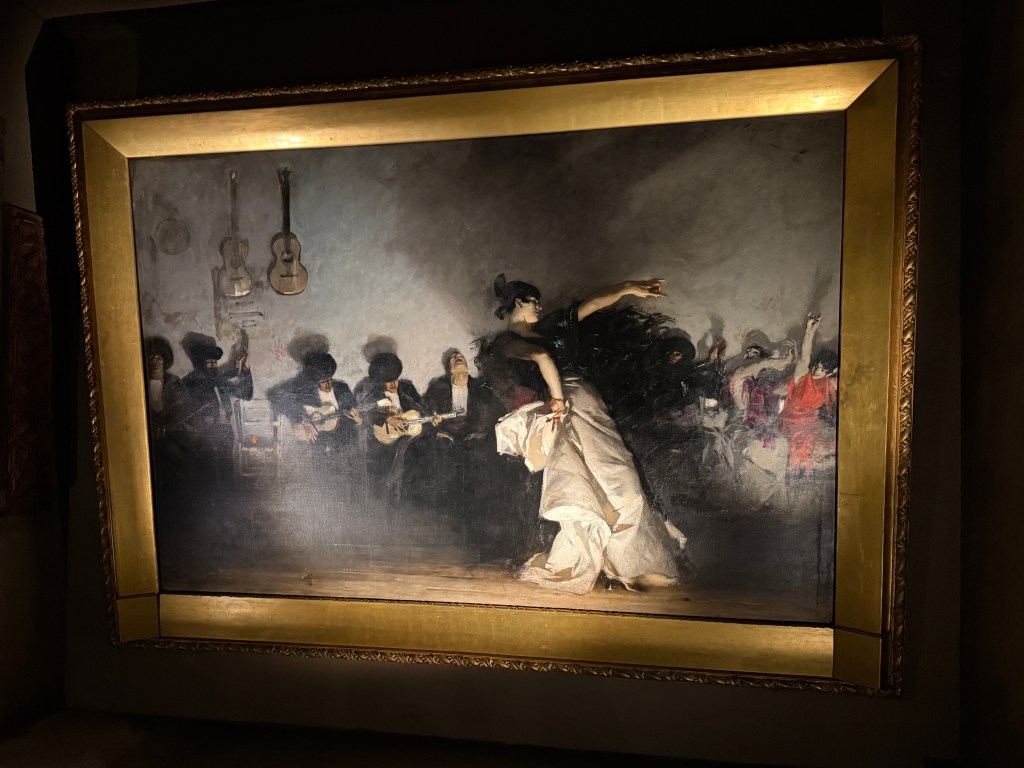
We visited the museum in the evening, when it was dark, so the lighting and darker rooms created a moody dramatic atmosphere. The painting itself is also very large at over 7 feet tall and 11 feet wide.
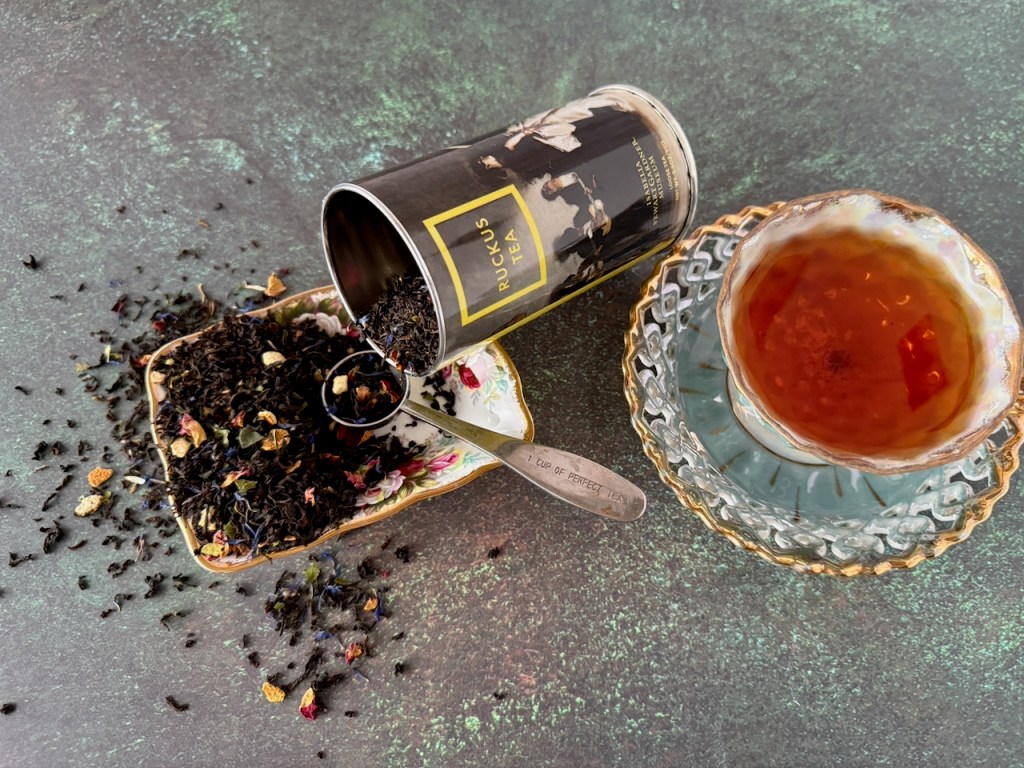
Bruce Richardson, tea blender, writer, and historian, shared this painting with us and the “ruckus” that it creates. Then we were gifted tins of the loose tea blend he created specifically for the museum, based on this particular painting, called Ruckus Tea.
Reading the ingredients on the tin gives you a first glimpse of the energetic blend of flavors one is about to experience. Black teas from Sri Lanka and China, dried Seville orange peel, lemon peel, the heady aroma of oil of Bergamot, bright blue cornflowers, lime leaves, and rose petals. All creating a colorful “ruckus” of tea that is as beautiful as it is delicious.
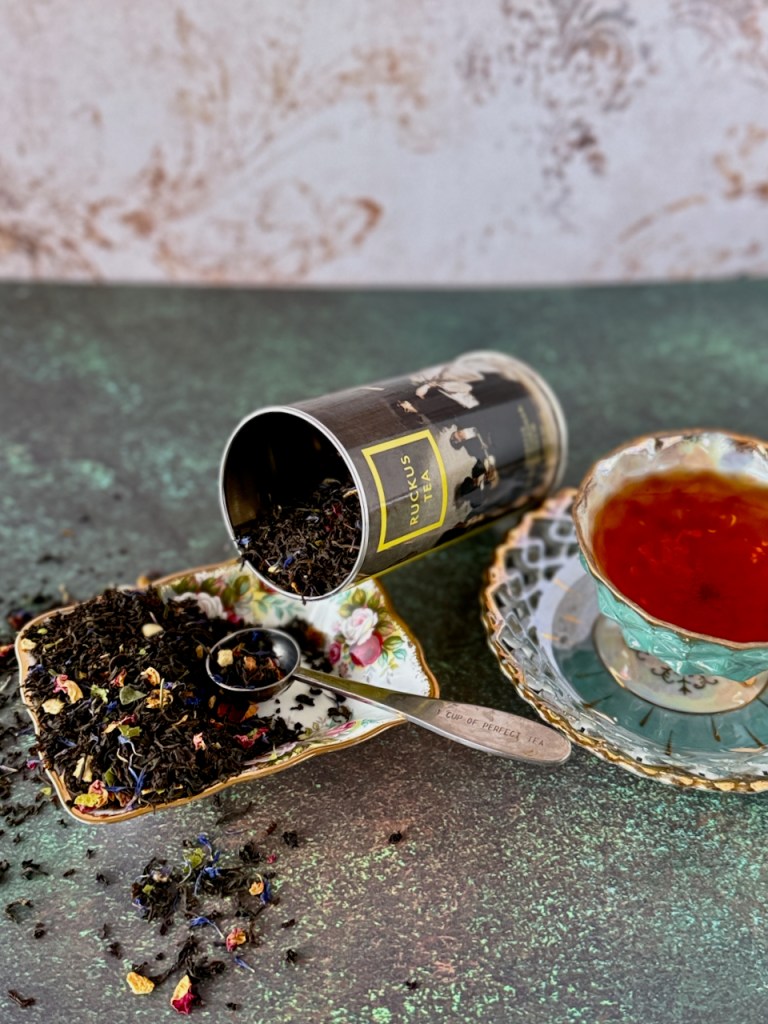
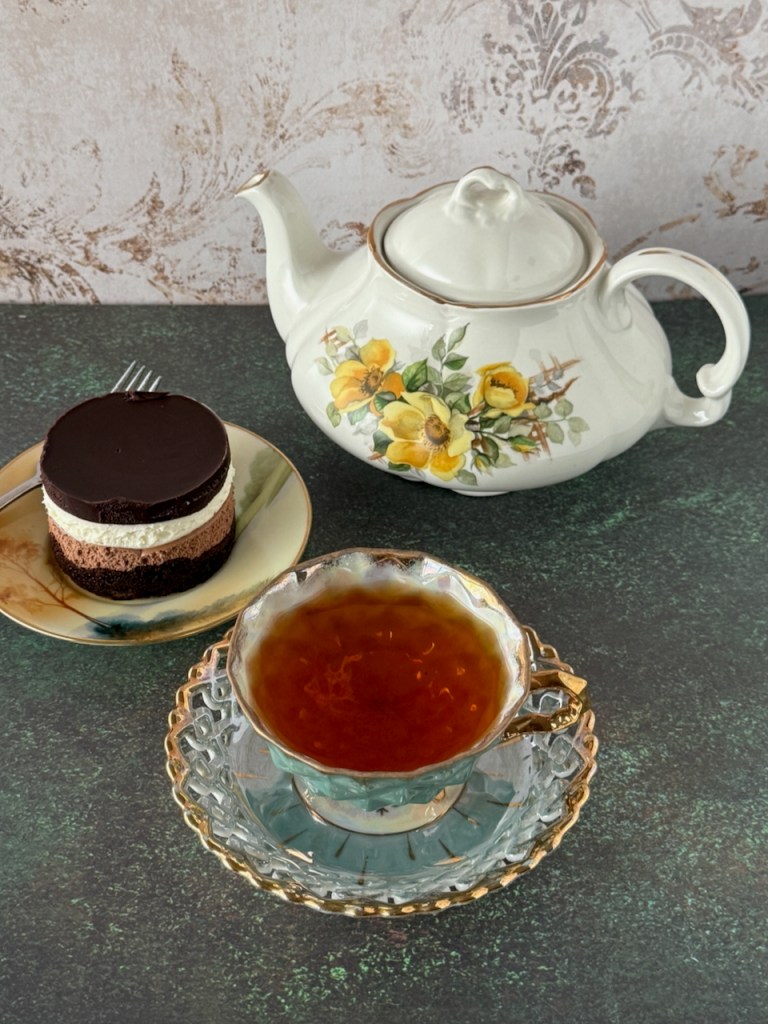
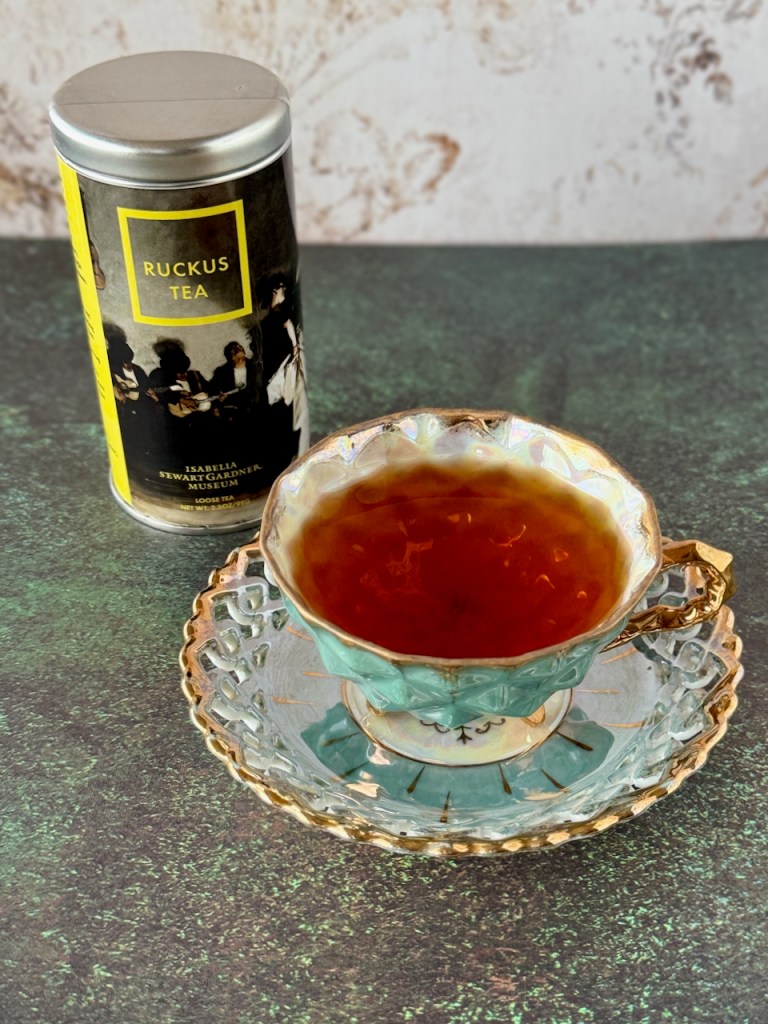
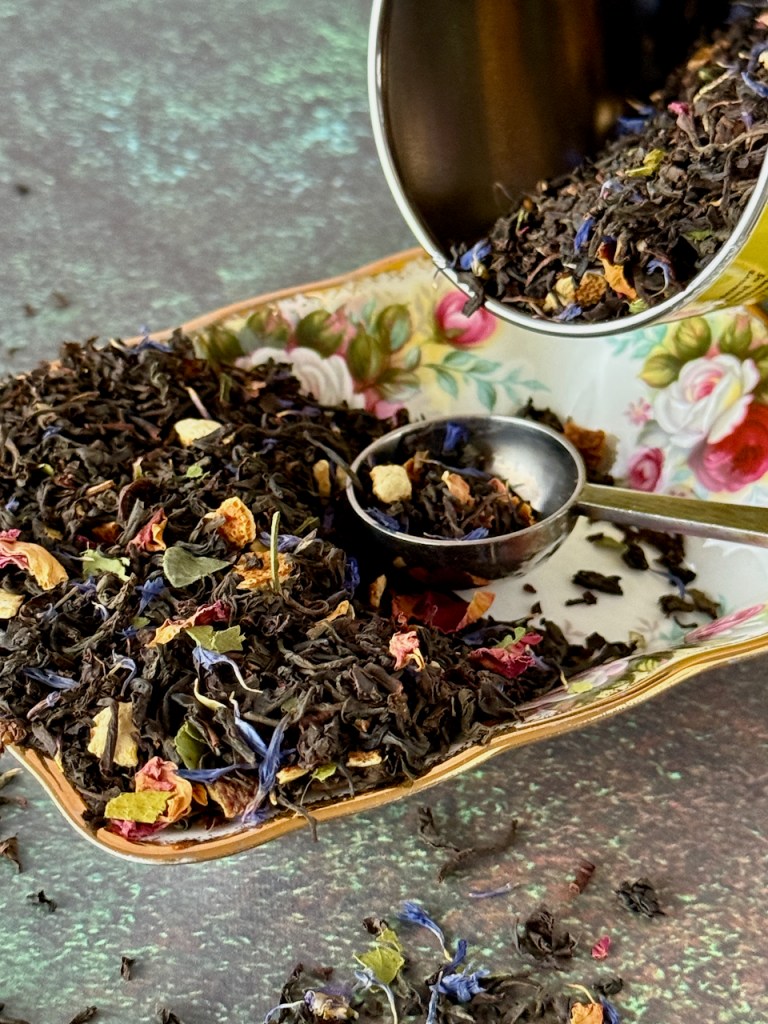
I decided to select tea ware that didn’t match. Gypsies probably didn’t have formal tea sets in the late 1800’s. Although that’s strictly an assumption on my part. I grabbed the only truly dramatic teacup I own. Oh, my…the chaos!
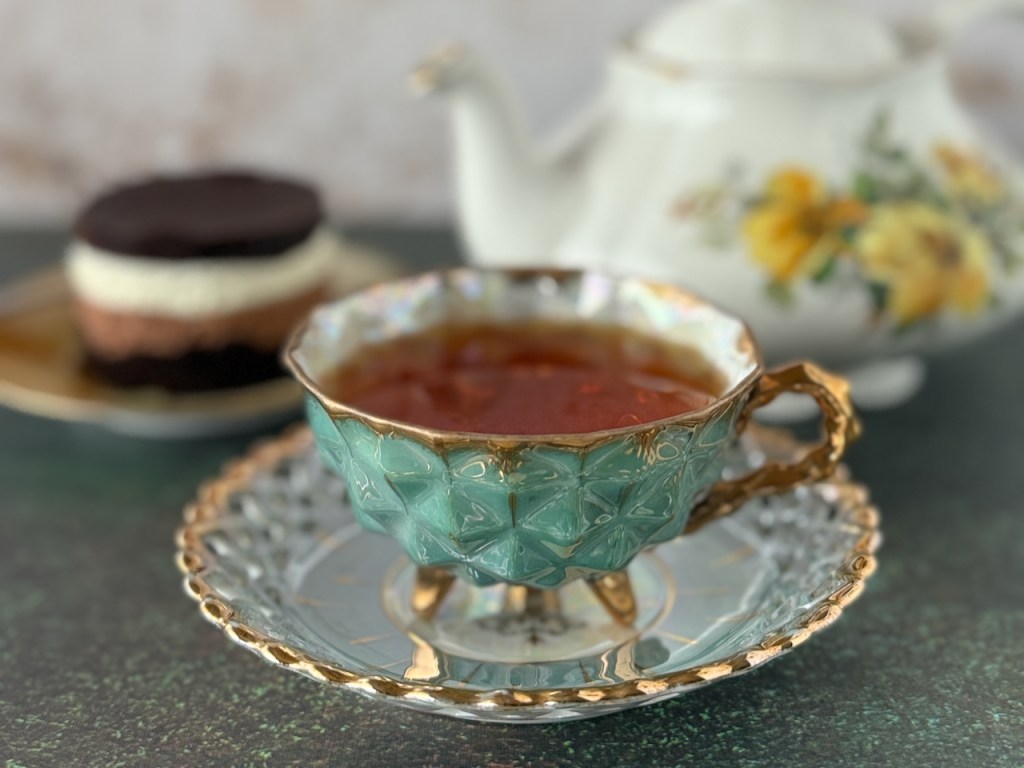
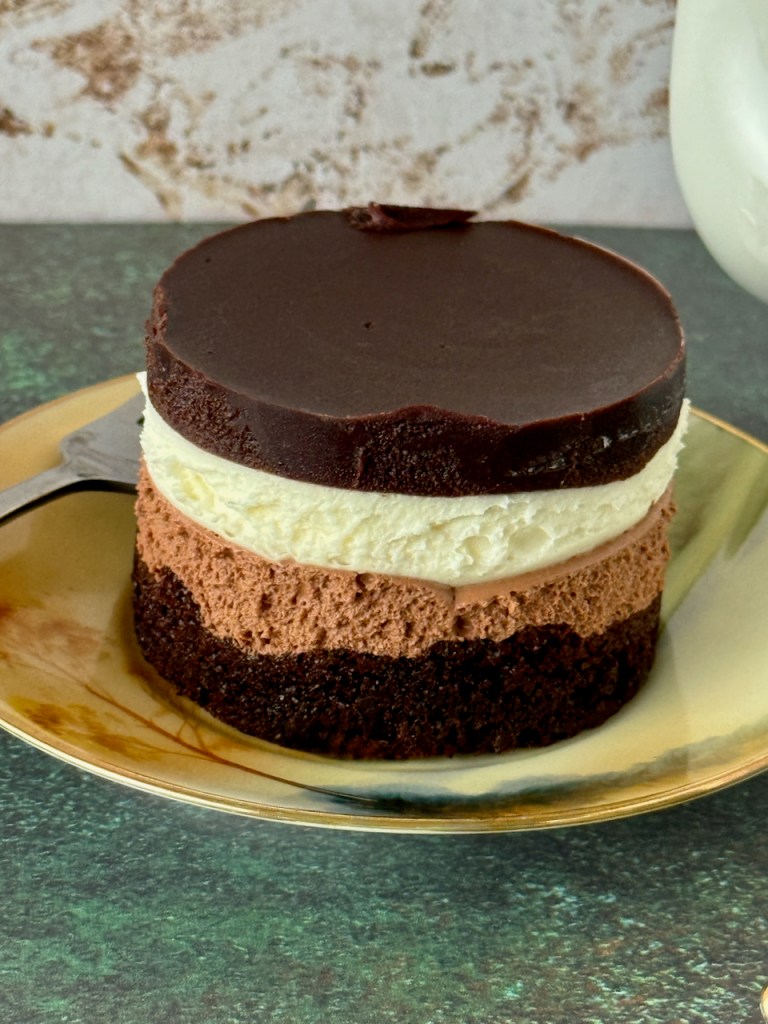
Now, what do I eat with this riotous blend? I picked up a 3” White and Milk Chocolate Mousse. The bold character of the black tea and the tannins in the tea helped balance the sweetness of the mousse making each bite more enjoyable.
I love this tea! A riotous blend of bold flavors and based on a painting I saw in person with the man who created the tea blend. What’s not to love?
Don’t be afraid to go outside the lines a little bit and create a wee ruckus and dance. Cheers!


Leave a Reply